How Anchor's Collapse Dragged UST and LUNA Into a Death Spiral

A multi-billion-dollar ecosystem came apart in a matter of days, and the damage reached far beyond the usual crypto audience. Anchor Protocol's collapse triggered a chain reaction that pulled down UST's peg and LUNA's price alongside it, and the fallout is expected to touch startups, funds, and treasuries well outside Terra itself.
01The setup
Through the first quarter of 2022, a bearish macro backdrop — rising inflation and consecutive Fed rate hikes — pushed capital toward what looked like a safe harbor: UST via Anchor. That demand pushed UST's market cap above $18 billion and LUNA to an all-time high of $119.18. Anchor's advertised 20% yield, and looped strategies through Degenbox offering upward of 100%, made the trade difficult for many to pass up, even as a growing chorus warned the setup wasn't sustainable.
Do Kwon dismissed such warnings repeatedly, publicly sparring with skeptics he labeled "cockroaches." One notable critic was MakerDAO founder @runekek, who, after UST's market cap surpassed DAI's in December, called the coin a "solid ponzi." Kwon, self-styled as the "Master of Stablecoins," responded by pushing Terra deeper into the Curve Wars via the 4pool project with a pointed battle cry, and separately framed Terra's growing BTC reserves as ushering in a "new monetary era of the Bitcoin standard."
The entire structure rested on one condition holding: LUNA's market cap needed to stay above UST's.
02The de-peg begins
The first crack appeared the preceding Saturday, when UST briefly slipped just under $0.99. Capital moved out of Anchor, back to Ethereum, and into Curve, where the UST pool saw roughly $2.2 billion in volume. Kwon, seemingly unbothered, referred to the incident afterward as an "amusing morning."
After a quiet Sunday, the Luna Foundation Guard published a plan to counter further volatility. Kwon addressed rumors that LFG had sold BTC reserves during the wobble, clarifying instead that some Bitcoin had been loaned to market makers to help defend the peg if it became necessary. With Bitcoin already under pressure and markets declining broadly, offloading $750 million in BTC to prop up UST was not an appealing option.
Monday brought a tense calm, with UST trading just under its peg — until the situation deteriorated sharply as UST's and LUNA's market caps flipped, and panic set in. Anchor deposits fell by roughly half, from over $14 billion before the weekend to around $6 billion. Leveraged positions on Degenbox began liquidating in large numbers, and even 0xSifu took losses tied to his prior involvement with Wonderland.
Selling pressure left Binance's order book empty to the point that the exchange halted sales below $0.70, and Terra Network withdrawals were suspended for several hours at the peak of the panic. Curve nonetheless kept seeing heavy UST selling wherever liquidity could be found. UST bottomed around $0.67, recovered briefly, dipped again to $0.72, and eventually settled near $0.90.
By Tuesday, UST was holding roughly around that $0.90 level while LUNA traded near $30 — down close to 50% from the prior day. After an extended silence, Kwon teased an upcoming "recovery plan." Unconfirmed reports then surfaced describing a possible $1–1.5 billion bailout funded by selling discounted, year-locked tokens — though at the time LUNA's market cap sat around $12 billion and UST's above $15 billion, raising doubts about whether that sum would be sufficient to halt the spiral. No official confirmation followed, leading some to speculate the leak may have been a trial balloon aimed at drawing in speculative capital.
As UST resumed falling, Kwon posted again, this time simply saying "Getting close." It later emerged that this was not Kwon's first failed stablecoin venture — reporting confirmed he had also founded Basis Cash, another algorithmic stablecoin that failed back in 2020.
03Where things stood
At the time of writing, UST was trading between $0.30 and $0.50. Kwon's proposed rescue plan centered on a governance proposal to sharply increase LUNA's minting capacity, intended to enable more effective arbitrage — at the cost of placing severe downward pressure on LUNA's own price. LUNA had already fallen more than 95% in 24 hours, to below $2.50, raising the question of why the plan hadn't already stabilized things if that mechanism was going to work.
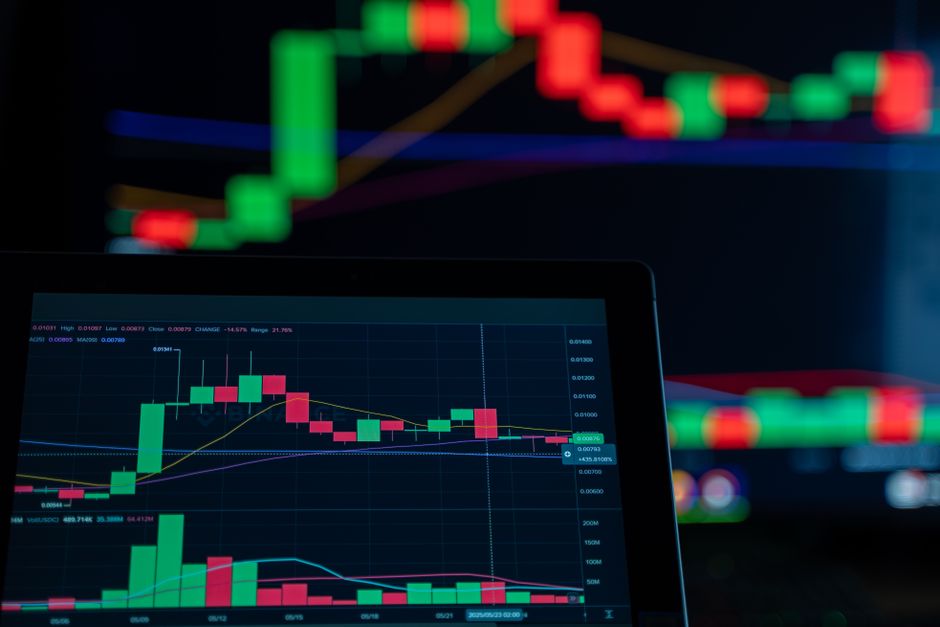
Total DeFi TVL had fallen by more than a quarter compared to before the weekend, and token prices broadly were down significantly — DAI being a notable exception. The contagion spread beyond Terra: USDN began de-pegging, and Tron faced its own pressure. Unconfirmed rumors also pointed to major institutional losses and firms facing existential threats as a result of exposure to UST or LUNA.
04Aftermath and open questions
Regulators moved quickly to cite the collapse as justification for tighter stablecoin oversight ahead of potential CBDC rollouts. Many affected Anchor users maintained they hadn't understood themselves to be taking on real risk — numerous accounts described treating UST as a safe alternative to more volatile assets rather than a speculative bet, and it remains unclear whether insurance protocols covering some of these positions have sufficient reserves to pay out against an event of this scale.
Some observers have floated the theory that the collapse was a deliberate attack rather than simply a flawed design failing under stress — pointing to a warning raised back in November about a similar attack vector, to which Kwon had replied, "Billionaires in my following, go ahead, see what happens." Others have suggested the timing was notable and plausible: the upcoming launch of the 4pool would have made price manipulation substantially more expensive by deepening liquidity, and a withdrawal of 150 million UST from Curve on the preceding Saturday preceded the initial de-peg by only minutes. A few have even suggested regulatory involvement, though none of these theories move past speculation at this stage.
Whatever the ultimate cause, the episode is likely to set back near-term confidence in DeFi and slow broader adoption, regardless of whether the reasoning driving that caution holds up to scrutiny.
Get new scam files the moment we publish them — usually 2–3 emails a week.